Why Holiday Attractions Matter Beyond Seasonal Cheer
Think of a Christmas market tucked into a town square, or a lantern festival that draws thousands to a neighborhood most visitors would otherwise never find. These aren't just nice things to do on a weekend. They're functioning pieces of a local economy, and when they're planned well, the benefits spread far beyond the main event.
Visitor spending rarely stays contained to a single venue. Someone who drives forty minutes to see a winter light display will often stop for coffee, browse a nearby gift shop, or grab dinner before heading home. That spillover is real and measurable. A 2019 study of seasonal tourism events in the UK found that for every pound spent at the attraction itself, an additional 40 to 60 pence was generated in surrounding businesses. Small cafés, independent retailers, local transport operators, and food producers all stand to gain from a well-attended annual event.
Rooted participation is what separates a genuinely community-building attraction from one that simply happens to be located somewhere. When local artisans supply the goods, local musicians perform, and local volunteers help run the event, the whole thing starts to feel less like a product and more like a tradition. That distinction matters for residents, not just visitors.
There's also a cultural dimension that's easy to overlook. Recurring seasonal events give communities a shared calendar, a rhythm. They can preserve craft traditions, regional food practices, and folk histories that might otherwise fade quietly. A harvest festival that's been running for thirty years isn't just entertainment. It's a form of living cultural record.
Responsible planning is what makes this possible over the long term. Attractions that source locally, manage crowd impact thoughtfully, and reinvest a portion of revenue back into the area tend to earn genuine community support. That support, year after year, is what turns a seasonal event into something the neighborhood actually claims as its own.
Charitable Partnerships and Fundraising Create Shared Local Value
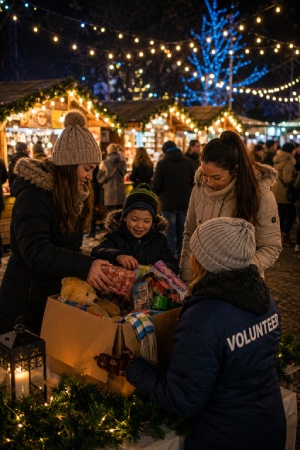
Some of the most meaningful things that happen at a holiday attraction have nothing to do with the lights or the rides. Across the country, seasonal events have quietly become significant fundraising platforms for local causes, turning visitor attendance into something with real community weight.
Toy drives are a common starting point. Many winter attractions partner with local charities to collect new, unwrapped gifts at the entrance, giving families a tangible way to contribute before they've even bought a hot chocolate. Others run percentage-of-sales campaigns, where a portion of ticket revenue goes directly to a food bank, children's hospital, or neighborhood arts program. The Enchanted Forest event in Thetford, for example, has raised thousands for local hospice services over its annual run, simply by building donation into the experience rather than treating it as an afterthought.
Partnerships with schools add another layer. Some attractions offer free or discounted group nights for low-income students, funded through corporate sponsorships tied to the event. That arrangement benefits everyone involved: businesses get visible community credit, schools get access they couldn't otherwise afford, and the event itself earns goodwill that no marketing budget can manufacture.
There's no denying that these tie-ins also deepen public trust. When visitors know that buying a ticket supports the local food pantry or funds a community arts grant, attendance stops feeling like passive consumption. It becomes a small act of participation in something larger than a night out.
Nonprofits benefit from the visibility too. A charity stall at a well-attended seasonal event can reach more people in one weekend than months of standard outreach. Some holiday attractions now run formal community grant schemes, inviting local organizations to apply for funding tied directly to the event's annual proceeds. That kind of structure turns a temporary attraction into a recurring source of neighborhood support, year after year.
Seasonal Employment Opens Doors for Local Workers and Small Businesses
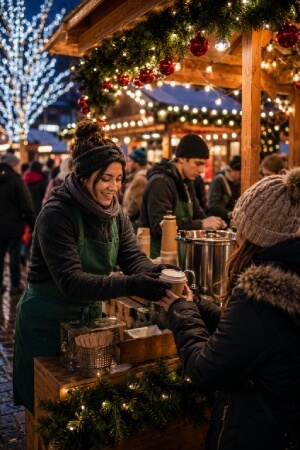
For many people in towns built around holiday attractions, the festive season isn't just a time of celebration – it's when the rent gets paid. Temporary roles in hospitality, event operations, catering, security, retail, and transport can generate real income during a concentrated high-spending period. A single large Christmas market or seasonal theme park event might employ anywhere from 50 to several hundred local workers across just a few weeks.
The ripple effect reaches well beyond the attractions themselves. Local food suppliers get contracts to stock event vendors. Independent performers – musicians, storytellers, street entertainers – find paid bookings they wouldn't otherwise have. Family-run transport companies pick up shuttle contracts. Craftspeople sell directly to visitors who've arrived specifically because of the event. There's no denying that a well-run seasonal attraction can function almost like a short-term economic engine for its surrounding area.
That said, the community benefit depends heavily on how employers behave. Paying at or above the minimum wage, hiring from within the local area rather than importing staff from outside, and offering basic training all make a measurable difference. Seasonal work that teaches transferable skills – customer service, food hygiene certification, event coordination – gives workers something to carry into future employment rather than leaving them where they started.
Some attractions have started building longer relationships with their seasonal workforce, offering returning staff first priority for roles the following year. That kind of continuity matters. It reduces the feeling that seasonal workers are disposable, and it builds institutional knowledge that actually improves the event over time.
Where employers cut corners – paying cash in hand, ignoring safety standards, relying on zero-hours contracts with no flexibility – the benefit to the community shrinks fast. Seasonal employment done well is a genuine opportunity. Done poorly, it's just another short-term arrangement that extracts more than it gives.
Recurring Annual Events Build Local Identity and Neighborhood Engagement
There's something that happens when a community does the same thing together, year after year. A winter light trail that started with a handful of volunteers and some borrowed extension cords can, within a decade, become the event people plan their December around. That kind of slow accumulation matters more than any single spectacular moment.
When residents anticipate an event – when they know it's coming, when they've been before, when their children expect it – the event stops being a tourist attraction and becomes a shared ritual. Schools in towns with established holiday markets often build seasonal projects around them. Local students design window displays, write histories of the event, or perform at community stages. That participation creates ownership. The kids who made a paper snowflake display for the 2018 festival are teenagers now, and they remember.
Volunteering is another thread that weaves these events into neighborhood life. Many recurring holiday attractions rely heavily on local stewards, guides, and organizers who return each year. That consistency builds informal networks and relationships that exist well beyond the event itself. A retired teacher who marshals crowds on the opening weekend probably knows half the town by name.
Public spaces take on new meaning, too. A town square that feels underused for most of the year becomes a gathering point when the annual event arrives. Residents who might otherwise pass through without stopping find themselves lingering, talking to neighbors, watching children react to something for the first time. Intergenerational moments like these are harder to manufacture than they look.
Civic pride tends to follow. Communities that host well-loved annual events often develop a quiet confidence about what makes their place worth caring about. There's no denying that a recurring tradition – even a modest one – signals something to residents: that this place is worth celebrating, and that the people here are capable of creating something together.
Holiday Attractions Encourage Repeat Tourism and Long-Term Regional Interest
One of the less obvious community benefits tied to holiday attractions is how effectively they encourage repeat tourism. A successful winter event rarely attracts visitors just once. Families often return annually, bringing friends or relatives with them, and over time that consistency helps smaller towns and neighborhoods build a recognizable seasonal identity. In many places, holiday events have become one of the few dependable tourism drivers during colder months, especially for areas that normally see reduced visitor activity outside summer seasons.
That repeat attention matters because it creates stability. Local businesses can plan around predictable winter foot traffic, accommodation providers can extend their busy season, and cultural organizations gain opportunities to showcase the area to audiences who may not otherwise visit. A strong seasonal reputation can also reshape how outsiders perceive a location long after the decorations come down.
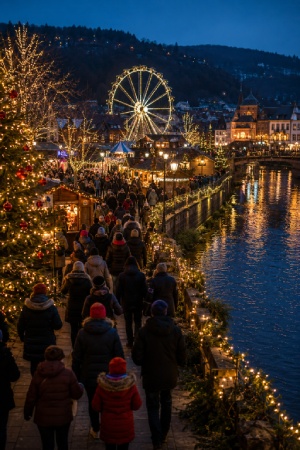
Some of the strongest long-term impacts come from the way holiday attractions encourage visitors to explore beyond the main event itself. Many guests arrive for the attraction but end up discovering independent restaurants, museums, historic districts, or waterfront areas nearby. Over time, those experiences can gradually reposition a town from “somewhere to pass through” into a destination people actively choose to revisit.
There are several ways recurring holiday tourism creates wider community value:
- Hotels and guesthouses benefit from off-season bookings that help stabilize annual revenue.
- Local restaurants often see increased evening traffic from visitors attending nighttime events.
- Small retailers gain exposure to customers who may later order online or return during other seasons.
- Regional attractions such as galleries, heritage sites, and parks receive secondary visitor interest.
- Transport providers, including taxis and local rail services, experience increased seasonal demand.
- Towns with successful annual events often receive additional media coverage and tourism promotion.
There's also a psychological effect that shouldn't be ignored. Residents tend to feel differently about places that others make an effort to visit. Seeing outsiders travel specifically to experience a local event can strengthen civic pride and encourage further community involvement. In some towns, that momentum has led to broader improvements, including renovated public spaces, expanded cultural programming, and increased support for future local initiatives.
Not every attraction creates that kind of lasting influence, of course. Events that become overcrowded, overly commercialized, or disconnected from the surrounding community can quickly lose public goodwill. But attractions that evolve carefully, involve local voices, and maintain a clear sense of place often become far more than seasonal entertainment. They become part of the region's identity and an ongoing reason for people to return year after year.
When Celebrations Give Back, Communities Shine Brighter
There's no denying that the most lasting impact a holiday attraction can have goes well beyond ticket sales and twinkling lights. Seasonal events that weave together charitable giving, local hiring, small business support, and genuine neighborhood participation do something harder to measure but easy to feel – they make a place stronger. When a winter market reserves stalls for local makers, raises funds for a nearby food bank, and brings in seasonal staff from the surrounding streets, every visitor's spending becomes a small act of community investment. The choice of where to go, what to buy, and which events to support carries real weight. Attending a community-rooted holiday attraction rather than a corporate alternative, picking up a handmade gift from a local vendor, or simply showing up year after year to an event that defines a neighborhood's identity – these are not grand gestures, but they add up. Communities thrive when people treat their presence and their spending as something that matters.