Accessibility and Ease Matter From the Start
Long before a family sees a single twinkling light or hears a carol, they've already formed an opinion about the event. The parking situation alone can decide whether the mood is festive or frayed by the time anyone reaches the gate.
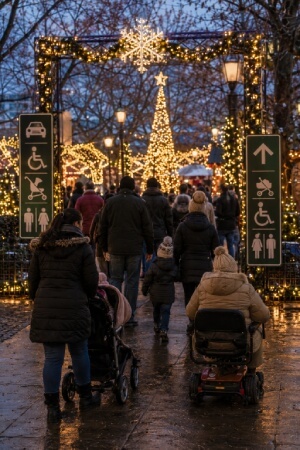
Parents with strollers, grandparents with limited mobility, and toddlers who've already hit their limit before 6 p.m. are all navigating the same entrance. When a venue offers clearly marked drop-off zones, paved pathways from the lot to the entrance, and staff positioned to direct foot traffic, that's not a small detail. It's the difference between an outing that feels manageable and one that feels like an ordeal. Events like Chicago's ZooLights and Denver's Winter Wonderlights have invested in this kind of arrival experience, and families notice.
Stroller access matters more than most event planners seem to realize. Gravel paths, narrow turnstile entries, and stairs without ramps are immediate friction points. A family pushing a double stroller through a crowded holiday market quickly learns which venues actually planned for them and which simply added a stroller symbol to the website.
Restroom availability is another honest test. Family restrooms with changing tables, enough stalls to avoid 20-minute waits, and locations that don't require crossing the entire venue are the kind of logistics that parents discuss in reviews. Nursing spaces, even a quiet corner with seating, are still rare enough at outdoor events that venues offering them earn genuine loyalty.
Signage shapes the whole experience. Clear wayfinding that uses both text and icons helps multigenerational groups split up and regroup without stress. When a grandmother can find the warm seating area independently, or a parent can locate the nearest restroom without asking three staff members, the event feels designed for real people.
Ease of movement isn't a bonus feature. It's the baseline families use to judge whether a venue respects their time.
Families Want Attractions Built for Real Winter Conditions
Cold is manageable. Unprepared is not. Parents booking winter holiday events aren't expecting tropical comfort, but they are expecting that an attraction has thought seriously about what happens when temperatures drop to single digits or a storm rolls in on a Saturday afternoon.
Heated shelters and indoor warm-up zones have become near-standard expectations at well-run outdoor events. A light show or ice village that offers nothing more than open air and a hot cocoa cart will lose families fast. Parents with young children especially are scanning event websites before they book, looking for specific language about covered queues, warming tents, and whether the main activity areas have any wind protection.
Path lighting matters more than most organizers seem to realize. Winter darkness sets in early, often by 5 p.m., and poorly lit walkways create real anxiety for parents managing strollers or children who wander. Events that invest in ground-level lighting along pathways, not just overhead displays, signal that they've thought through the full family experience rather than just the spectacle.
Timed entry has become a genuine selling point. Crowds at popular winter events can make an already cold outing miserable, and parents appreciate knowing they won't spend 40 minutes standing in an exposed queue with a four-year-old. Attractions that offer staggered arrival windows and communicate expected wait times clearly earn strong repeat business.
Perhaps the biggest trust signal is a transparent cancellation and refund policy. Severe weather is unpredictable, and families making plans weeks in advance want to know they won't lose $80 in tickets if an ice storm forces a closure. Events that offer flexible rescheduling or straightforward refunds see higher advance bookings. There's no denying that financial risk makes cautious families hesitate.
Gear recommendations on event websites, something as simple as "dress for 20°F and bring hand warmers," help families arrive ready rather than resentful.
Crowd Management and Kid-Friendly Design Make or Break the Day
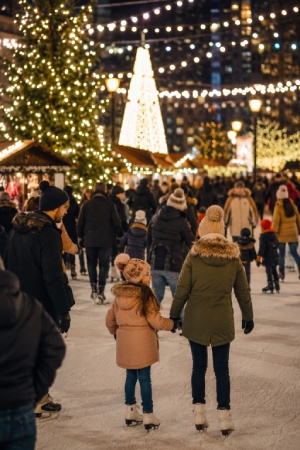
There's a real difference between an event that looks magical in photos and one that actually works for a family with a six-year-old and a toddler. Parents have learned, often the hard way, that visual spectacle doesn't mean much if the experience involves 45-minute queues, no clear sightlines during the light show, and zero indication of where to go if a child gets separated.
Timed admissions have become one of the clearest signals that an event is well-organized. When venues like Denver's Winter WonderFest or Chicago's ZooLights cap entry by the hour, crowd density stays manageable and families can actually move. Without that structure, bottlenecks form fast, especially near parade routes and popular photo installations, and the evening unravels quickly.
Viewing strategies matter more than most first-time visitors expect. Families who arrive 20 minutes early to stake out a low-barrier spot along a parade route have a very different experience than those who show up at start time and find themselves three rows back with a four-year-old who can't see anything. Events that publish viewing maps in advance, or that designate family zones near the front, earn repeat visitors.
Quiet spaces are a smaller but genuinely appreciated detail. Sensory-heavy environments, the noise, the crowds, the flashing lights, can overwhelm younger children quickly. A designated low-stimulation area isn't just considerate; it can rescue an evening that's heading south.
Kid-friendly design goes beyond having a few activities scattered around. Parents want movement built into the experience, hands-on stations where children can make something, short performances timed to realistic attention spans, and activities that span ages rather than targeting one narrow group. A craft station that works for a five-year-old and a ten-year-old simultaneously is worth its weight.
Lost-child procedures are rarely advertised but always evaluated. Families notice when staff are positioned visibly, when wristbands are offered at entry, and when the event feels staffed rather than just decorated.
Food Options and Evening Programming Shape the Full Experience
Hunger hits fast when kids are outside in the cold, and how a venue handles that moment often determines whether a family stays another hour or heads straight to the parking lot. Parents scan food options early, and what they find either builds confidence or raises red flags.
Snack stands are fine for a quick hot chocolate stop, but families planning a two-to-three-hour visit want something more substantial. A venue offering only kettle corn and churros by 6 p.m. will lose families who haven't eaten dinner. The most praised winter attractions tend to offer at least one warm, filling option alongside the seasonal treats. Allergy information matters too. Parents of kids with nut or dairy allergies often contact venues in advance specifically because posted menus rarely include ingredient details. If a venue can't answer that question easily, some families won't come at all.
Pricing draws its own scrutiny. A $14 grilled cheese and a $7 hot chocolate per child adds up quickly, and families notice when food costs rival the ticket price. Seating is another friction point. Standing at a high-top table with a five-year-old who's already tired is nobody's idea of a good time. Covered, heated seating areas near food stations consistently appear in positive family reviews.
Evening programming is where winter attractions either justify the late bedtime or don't. Tree lightings and synchronized light shows tend to run between 6 and 8 p.m., which works reasonably well for school-age kids. The trouble comes when headline events are scheduled at 9 p.m. or later. Fireworks are spectacular, but a 9:30 p.m. start with a 45-minute show means getting home past 11 for most families, and that's a real calculation parents make before they book.
Noise level matters more than venues typically acknowledge. Sudden loud finales can genuinely distress younger children, and a simple heads-up on the event page would go a long way.
Why Reviews and Social Proof Influence Family Booking Decisions
Families rarely book winter attractions based on promotional photos alone anymore. Before committing to tickets, parking fees, food costs, and travel time, most parents spend at least a few minutes reading reviews from other families who already attended. They want to know whether the experience actually matched the advertising and whether the event worked smoothly for children in real conditions. A polished website can create interest, but detailed feedback from other visitors often determines whether a booking feels worth the effort.
Parents especially pay attention to practical observations hidden inside reviews. Comments about stroller access, bathroom cleanliness, wait times, and indoor warming areas often carry more weight than descriptions of the light displays themselves. A review mentioning that pathways became muddy after snow or that food lines stretched beyond 30 minutes can change expectations immediately. Families are looking for predictability as much as entertainment, particularly when attending evening events with younger children.
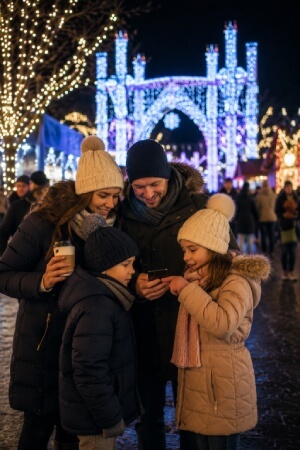
Social media has amplified this behavior. Short videos on TikTok, Instagram Reels, and Facebook community groups now shape public perception of winter attractions long before official marketing campaigns reach people. Parents often trust casual smartphone footage more than professionally edited advertisements because it reveals crowd density, lighting conditions, and pacing in a more realistic way. If a light trail appears too crowded to navigate comfortably with children, families notice immediately.
Photo opportunities also influence decision-making more than many organizers admit. Families want attractions that feel memorable enough to document. Interactive displays, oversized lantern installations, themed holiday backdrops, and immersive walkthrough sections all tend to generate stronger online sharing. Events that naturally encourage family photos often benefit from free organic promotion as visitors upload content during and after their visit.
Local parenting groups play a major role as well. Recommendations shared between parents in neighborhood Facebook groups or school communities often carry more credibility than online advertisements. A single trusted recommendation about manageable crowds or excellent accessibility can persuade multiple families to attend the same event during the season. Negative experiences spread equally fast, especially when they involve safety concerns, unclear organization, or weather-related frustrations.
The Best Winter Attractions Make Family Logistics Feel Easy
Parents who've survived a meltdown at a crowded Christmas market at 7 p.m. know exactly what's at stake when choosing a winter outing. The festive atmosphere matters, but it rarely saves an evening that's been derailed by long queues, no shelter from the cold, or a snack stand that ran out of hot chocolate by 5:30. Seasonal events that earn repeat visits tend to get the practical details right alongside the magic. Clear signage, stroller-accessible pathways, warm indoor rest areas, and staggered entry windows aren't luxuries – they're what separate a genuinely enjoyable family outing from an exhausting one. There's no denying that evening programming adds real appeal, especially for families who can't arrive until after school, but it only works when lighting, crowd flow, and food service are calibrated to handle the after-dark rush. Kid-friendly pacing matters just as much as the programming itself. A two-hour event with four concentrated activity zones tends to land better than an all-day sprawl that leaves younger children overstimulated before the main attraction.
Weather preparation is another area where organizers often underestimate what families need. Covered walkways, heated waiting areas, and clear communication about what happens if conditions deteriorate give parents the confidence to commit to a booking weeks in advance. Accessibility is equally non-negotiable. Events that accommodate wheelchairs, sensory-sensitive children, and non-English-speaking families consistently draw broader audiences and stronger reviews. Families today are making booking decisions based on all of this before they ever see the event's headline feature. The most successful seasonal winter attractions understand that a parent's confidence in the logistics is inseparable from the experience itself – get the planning support right, and the holiday magic tends to take care of itself.